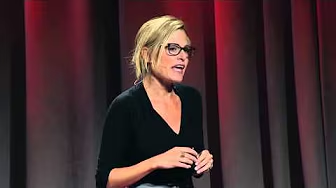
Why You Procrastinate - and How to Stop it for Good | Elyssa Smith | TEDxBabsonCollege
📚 Main Topics
Understanding Procrastination
- Procrastination is often a coping mechanism linked to stress and trauma.
- It can stem from negative self-talk and feelings of inadequacy.
Types of Trauma
- Big T TraumaMajor traumatic events (e.g., war, domestic violence).
- Little t TraumaNon-violent situations causing emotional distress (e.g., bullying).
- Tiny Tea TraumaUnmet needs in childhood leading to negative self-beliefs (e.g., perfectionism).
Brain Function and Procrastination
- The brain's survival mechanisms can trigger procrastination as a way to avoid perceived threats (e.g., fear of failure).
- The right brain (survival mode) can overpower the left brain (logical thinking), leading to poor decision-making.
Case Studies
- FranchescaOvercame procrastination linked to childhood expectations of being organized, leading to a promotion.
- AmaniAddressed her procrastination related to perfectionism, resulting in completing her kitchen project and changing jobs.
Tools for Overcoming Procrastination
- Techniques to calm the nervous system and create a sense of safety.
- Exercises to activate the vagus nerve and regulate stress responses.
✨ Key Takeaways
- Procrastination is not just laziness; it can be a sign of deeper emotional issues and past trauma.
- Understanding the root causes of procrastination can lead to significant personal growth and achievement.
- By addressing trauma and using specific techniques, individuals can rewire their negative self-beliefs and improve their productivity.
🧠 Lessons
- Self-AwarenessRecognizing the impact of past trauma on current behaviors is crucial for personal development.
- Coping MechanismsInstead of relying on procrastination, individuals can learn healthier coping strategies.
- EmpowermentEveryone has the potential to overcome their challenges and achieve their goals by addressing underlying issues and practicing self-care.
By applying these insights, individuals can work towards eradicating procrastination and unleashing their highest potential.
Transcript excerpt
0:10 the world is divided into two groups see which one you fall into people who can handle stress succeed build a great life and people who can't handle stress feel like a constant failure and struggle their whole lives here's the good news I made up those groups that's not a thing but my whole life I thought that
0:40 was a fact and that I had been born into that second group my name is Elsa Smith I'm a trauma-informed life strategist and I'm going to tell you today how to completely eradicate your procrastination for good my whole life I procrastinated I left everything to the last second in school and I constantly felt like I wasn't good enough like I thought everything was just harder for me and in order to compete with that first group
1:11 that successful group I had to work harder be better do more and it was crushing today I'm going to share with you the Deep secret that Lies Beneath Your procrastination it's probably not what you think it lies inside your brain now you might procrastinate and feel like it's not that big of a deal I get stuff done eventually right and I did too I was actually a really good student I was the overachiever in my family but that pressure to constantly be better
🔒 The full, searchable transcript is available with Pro.
Questions & Answers
Common questions about this video
What are the two groups the world is divided into according to Elsa Smith?
What is the main cause of procrastination according to Elsa Smith?
How does Elsa Smith describe Tiny T trauma?
What role does the brain's right and left hemispheres play in procrastination?
What is the suggested method to calm the nervous system and reduce procrastination?
How can understanding Tiny T trauma help improve performance and self-belief?
What is the long-term benefit of addressing past trauma related to procrastination?
What is the key message Elsa Smith wants viewers to take away about procrastination?
Related summaries

How to use Quantum Physics to Make Your Dreams Your Reality | Suzanne Adams | TEDxUNO

Brain Hack: 6 secrets to learning faster, backed by neuroscience | Lila Landowski | TEDxHobart

Type 2 diabetes | Sarah Hallberg | TEDxPurdueU
Modern Discrimination: Subtle but Significant: Mikki Hebl at TEDxRiceU

What Women Want Men To Know About Sexism | Theresa Vescio | TEDxPSU