Large Language Models explained briefly
📚 Main Topics
Introduction to Large Language Models (LLMs)
- Collaboration with the Computer History Museum to create an explainer video.
- Importance of making complex topics accessible.
How LLMs Work
- LLMs predict the next word in a sequence based on input text.
- They assign probabilities to all possible next words rather than providing a single answer.
Training Process
- Training involves processing vast amounts of text data, equivalent to a human reading for over 2600 years for models like GPT-3.
- Parameters or weights are adjusted through backpropagation to improve predictions.
Scale of Computation
- Training LLMs requires immense computational power, often taking over 100 million years of operations at high speeds.
Types of Training
- Pre-trainingAuto-completing text from the internet.
- Reinforcement Learning with Human FeedbackFine-tuning the model based on user feedback to improve responses.
Transformers and Attention Mechanism
- Introduction of the transformer model in 2017, which processes text in parallel rather than sequentially.
- Use of attention mechanisms to refine word meanings based on context.
Emergent Behavior
- The specific predictions made by LLMs are emergent phenomena based on the tuning of parameters during training.
Conclusion and Further Learning
- Encouragement to visit the Computer History Museum exhibit.
- Suggestions for further resources on deep learning and transformers.
✨ Key Takeaways
- LLMs are sophisticated tools that generate text by predicting the next word based on context.
- The training of these models is a complex process that requires significant computational resources and data.
- The transformer architecture has revolutionized how language models process information, allowing for more nuanced understanding and generation of text.
🧠 Lessons
- Understanding the underlying mechanics of LLMs can demystify their capabilities and limitations.
- The importance of human feedback in refining AI responses highlights the collaborative nature of AI development.
- The scale of computation involved in training LLMs emphasizes the advancements in technology and the resources required for AI research.
This summary encapsulates the essence of the explainer video, providing insights into the workings of large language models and their significance in the field of artificial intelligence.
Questions & Answers
Common questions about this video
¿Qué hace un modelo de lenguaje grande cuando se usa en un chatbot?
Predice una distribución de probabilidades para la siguiente palabra a partir del texto que recibe. El chatbot repite el proceso para generar una respuesta, palabra por palabra.
¿Por qué un chatbot puede dar respuestas distintas al recibir el mismo mensaje?
Aunque el modelo es determinista, al generar texto puede elegir al azar palabras menos probables, así que una misma instrucción suele producir respuestas diferentes.
¿Cómo aprende un modelo de lenguaje a predecir la siguiente palabra?
Se le muestran muchos ejemplos de texto y se compara su predicción con la palabra verdadera que sigue. La retropropagación ajusta sus parámetros para que esa palabra sea más probable y las demás menos probables.
¿Qué es el preentrenamiento y por qué no basta para crear un buen asistente de IA?
El preentrenamiento enseña al modelo a completar pasajes de texto, pero ese objetivo no equivale a ser un buen asistente. Por eso los chatbots también pueden pasar por aprendizaje por refuerzo con retroalimentación humana, que ajusta el modelo según las preferencias de los usuarios.
¿Qué papel cumplen la atención y las redes neuronales feed-forward en un transformer?
La atención permite que las representaciones numéricas de las palabras se influyan entre sí según el contexto. Las redes feed-forward aportan capacidad adicional para almacenar patrones del lenguaje aprendidos durante el entrenamiento.
¿Qué distingue a los transformers de muchos modelos de lenguaje anteriores a 2017?
En lugar de procesar el texto palabra por palabra desde el principio hasta el final, los transformers lo procesan en paralelo.
¿Por qué es difícil explicar exactamente las predicciones de un modelo de lenguaje grande?
Aunque los investigadores diseñan la estructura del modelo, su comportamiento concreto surge de cómo se ajustan cientos de miles de millones de parámetros durante el entrenamiento. Por eso resulta muy difícil determinar por qué produce una predicción específica.
Related summaries

There's never been a better time to go into math
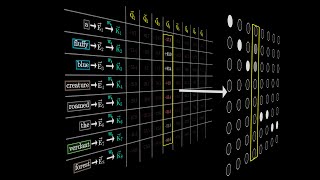
Attention in transformers, step-by-step | Deep Learning Chapter 6

Transformers, the tech behind LLMs | Deep Learning Chapter 5

But what is a neural network? | Deep learning chapter 1

A HAVAN Não É Só Uma Loja! O Negócio de Luciano Hang Que Poucos Entendem