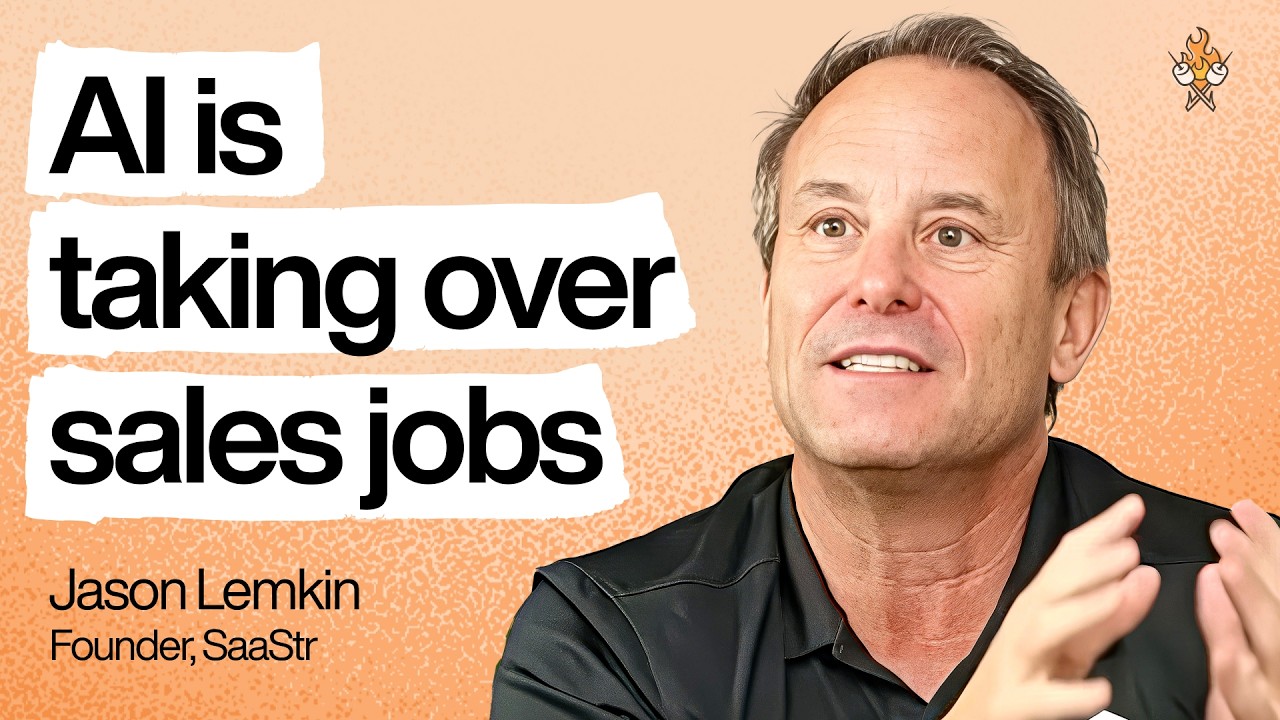
Why every company now needs to think and operate like a lab team | Josh Woodward (VP Google Labs)
📚 Main topics
- Why companies need a labs mindsetAs AI capabilities change quickly, companies need people who explore the frontier, test new possibilities, and help the organization act on promising discoveries. 3:04
- Where ideas come fromBreakthroughs rarely emerge from scheduled design sprints; they often start with curious people pursuing side projects and sharing what excites them. 5:44
- The “almost possible” frameworkTrack capabilities and experiences that are close to feasible, then act when a technical shift makes them possible and pair that opportunity with a real user problem. 7:47
- Recognizing product-market fitIn early tests, look for users leaning in and visibly responding to a prototype; focus on the problem you’re solving rather than getting attached to one product solution. 15:05
- When to stop or pivotTeams often recognize before leaders do when an idea has run out of momentum or repeated attempts aren’t working. 18:12
- Skills and team design in the AI eraWoodward highlights adaptability, collaboration, trust-building, and the ability to work effectively with both people and AI tools. 31:40
- How to structure a labs teamGive the team enough independence to explore, be clear about how its work serves the company, and let it challenge internal processes as well as build products. 47:47
✨ Key takeaways
- Stay close to the frontierExperiment with new models and technologies, and develop a point of view about what may become possible, while accepting that many predictions will be wrong. 10:54
- Pair excitement with user valueA dazzling demo is only a starting point; promising ideas also need a meaningful user need and a group of people who find the result valuable enough to pay for. 12:29
- Use different signals at different stagesEarly on, observe people’s reactions; as a product grows, focus more on measures of adoption, conversion, and scale. 46:45
- Keep specialties alongside broader building skillsPeople can prototype across functions, but their distinct expertise remains important to effective teams. 36:53
- Create a sustainable paceMake intense periods explicit, build in room to explore and recover, and avoid treating constant acceleration as the only productive mode. 38:57
- Plan with a short horizonMaintain a rolling view of roughly six months and aim for meaningful product progress in about 50 to 100 days, while staying responsive to sudden changes. 42:37
🧠 Lessons learned
- Make space for unexpected ideasDon’t rely on calendarized brainstorming alone; create an environment where small, passionate teams can experiment and share their work. 6:15
- Let teams speak honestlyLeaders should make it safe for people to say when a project isn’t working, and treat that candor as useful evidence rather than failure. 18:12
- Don’t confuse team growth with progressHiring quickly or building a large team doesn’t prove product-market fit; keep teams focused and test whether users actually want the product. 53:01
- Connect frontier work to the wider companyLabs can fail if they remain isolated or can’t help the organization recognize and commercialize promising work. 44:41
- Use labs to challenge how work gets doneA lab can test new roles and processes, not just new products, and can create constructive change within the company. 49:21
🏁 Conclusion and next steps
- Build a feedback loopWoodward sees an opportunity to use AI to gather and interpret product feedback, helping teams identify insights and opportunities more effectively. 56:41
- Keep experimenting and listeningCompanies should stay at the edge, invite feedback on what they build, and keep adapting their teams and priorities as capabilities change. 1:01:22
Transcript excerpt
0:00 My thesis is that every company needs to start thinking and operating like a labs team. >> Every company definitely needs a set of people, a team. Their job is to be at the frontier. They're the people who have like eight $200 a month subscriptions on everything. >> Everyone has to get really good at trying a bunch of stuff with the latest models, figuring out what is now possible before your competition does, before a startup comes and eats your lunch. >> You've got to try to create a space where weird things can grow. If you look at the history of a large company who starts a lab, the lab is usually
0:31 ineffective and fizzles out after about 3 to four years. You can't just nestle this under an existing business unit. It [music] has to have its own kind of independence. >> You've seen more ideas thrown at the wall and tried and prototyped than maybe anyone else. What are some patterns of where the best ideas come from? >> They very rarely come from design sprints. They don't come in conventional places. You can't microwave good ideas. What skills are you finding are trending up in value? >> I'm actually looking a lot right now for
🔒 The full, searchable transcript is available with Pro.
Questions & Answers
Common questions about this video
Why does Josh Woodward think every company needs to operate more like a labs team?
Where do the best ideas tend to come from?
What does the “almost possible” framework involve?
What early signs suggest a product idea could have product-market fit?
How can a team tell when it is time to kill an idea?
Which skills does Woodward see becoming more valuable in the AI era?
What should companies consider when setting up an internal labs team?
What is a common mistake when organizing a labs team?
Related summaries
Why “everyone’s a builder” isn’t working | A reality check with Sherif Mansour

Why PMs are suddenly valuable again | Tulsee Doshi (Head of Product, Gemini)

86 minutes of paid-growth alpha | Hector Serrano
An 86-minute guide to finding PMF | Rob Snyder (Author, The Power of Pull)

A mind-expanding conversation on how models actually work | Emmanuel Ameisen (Anthropic)